


On Tuesday 10 February in French Guiana, almost 250 citizens, researchers and students took part in the AIBSI science day organised by the University of French Guiana to discover innovative projects dedicated to sustainable development and the future of the Amazon region.
A day dedicated to science and sharing knowledge
Nearly 250 citizens, researchers, students and institutional representatives came together for the AIBSI science day organised by the University of Guyana. The event confirmed the growing interest in research rooted in local realities.
The aim was clear: to present the progress of work carried out since 2023 by doctoral students and scientists funded by AIBSI - Amazon Institute for Biodiversity and Sustainable Innovation. The lectures and presentations helped to explain the sometimes complex projects in simple terms.
The public was thus able to discover applied research directly linked to the environmental, economic and social issues facing the Amazon region. This proximity to the field reinforces the practical impact of the work being carried out.
A convivial moment to encourage people to meet
In addition to the scientific presentations, the AIBSI Science Day was also a convivial occasion. Informal discussions were held between researchers and the general public.
These privileged moments allowed ideas to be confronted and new perspectives to emerge. By promoting dialogue, the event encouraged the emergence of innovative collaborations. This collective dynamic shows that science is more effective when it is open to society. It then becomes a real lever for sustainable development.
Innovative projects to meet today's challenges
The AIBSI Science Day is part of an ambitious strategy to strengthen research in French Guiana and widely disseminate the solutions developed. Several projects illustrate this desire to take concrete action.
Improving housing thanks to the EIFFIEN project
The EIFFIEN project is looking at the energy performance of tertiary buildings in tropical zones. It seeks to improve comfort while reducing energy consumption. Carried out in collaboration with the Federal University of Amapá (UNIFAP), the programme analyses the influence of local materials, solar position and natural ventilation. Researchers are developing design support tools adapted to the Amazonian climate.
Inspired by the principles of bioclimatic architecture, EIFFIEN paves the way for thermo-energy standards specific to the region. Building better is thus becoming a sustainable priority.
Adding value to cocoa and cupuaçu with the THEOBROMA project
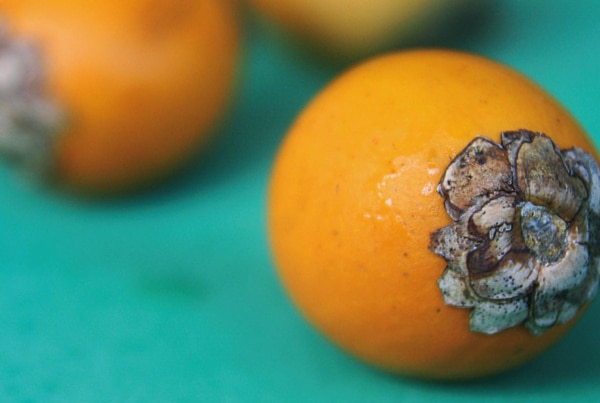
The THEOBROMA project aims to strengthen the local bioeconomy. It focuses on two emblematic products: cocoa and Guyanese cupuaçu. Researchers are studying the transformation processes, from fermentation to roasting. Their aim is to optimise nutritional quality while preserving health benefits.
Eventually, industrialisation methods that respect local know-how could consolidate the regional food industry.
Anticipating epidemics with the SÉROBHAG project
Infectious diseases of animal origin represent a growing risk. In Amazonia, Orthobunyaviruses transmitted by mosquitoes are still poorly understood. The SÉROBHAG project is mapping seroprevalence in humans and wildlife using high-throughput serology. This innovative approach makes it possible to identify areas of transmission. By anticipating risks, researchers are helping to prevent future epidemics. Public health benefits directly from these advances.
Bringing our musical heritage to life with ETH'MIX
ETH'MIX adopts a research-action-creation approach. The project aims to revitalise the indigenous musical heritage of French Guiana. Working with the Teko and Wayãpi communities, it offers workshops aimed at young people. Traditional music is combined with modern styles such as reggae. This initiative promotes cultural transmission and strengthens local identity. It proves that innovation can also be cultural.
Improving health thanks to the BIOCAPTEUR project
The BIOCAPTEUR project is a response to a crucial challenge: monitoring water quality in French Guiana. Developed in Kourou, it uses low-tech acoustic sensors.
Inexpensive and energy-efficient, this technology detects natural or human contamination in real time. It protects local populations. This model could be extended to other countries in the Amazon basin, strengthening its regional impact.
The AIBSI Science Day demonstrated the vitality of research in French Guiana. Sustainable housing, bioeconomy, public health, culture and the environment: each project responds to a specific challenge facing the region. By encouraging dialogue between scientists and the general public, the event strengthens local innovation. To support this dynamic, find out more about AIBSI's work and take part in the next scientific meetings.
FAQ
What is the AIBSI Science Day?
The AIBSI Science Day is an event organised by the University of Guyana. It provides an opportunity to present to the public the research projects funded by the institute and dedicated to sustainable development.
Who takes part in the AIBSI Scientific Day?
Researchers, doctoral students, students, citizens and representatives of local institutions all take part. The event promotes exchanges between science and society.
What types of projects are presented?
The projects focus on sustainable housing, the bioeconomy, public health, culture and the environment. All address the specific challenges of the Amazon region.
Why is this day important for French Guiana?
It promotes local research and encourages innovation to serve the region. It also strengthens regional and international cooperation.
How can I keep track of AIBSI projects?
You can consult the University of Guyana's papers and take part in upcoming scientific events. These initiatives are open to the public.


 EN
EN  FR
FR  PT
PT  NL
NL  ES
ES