

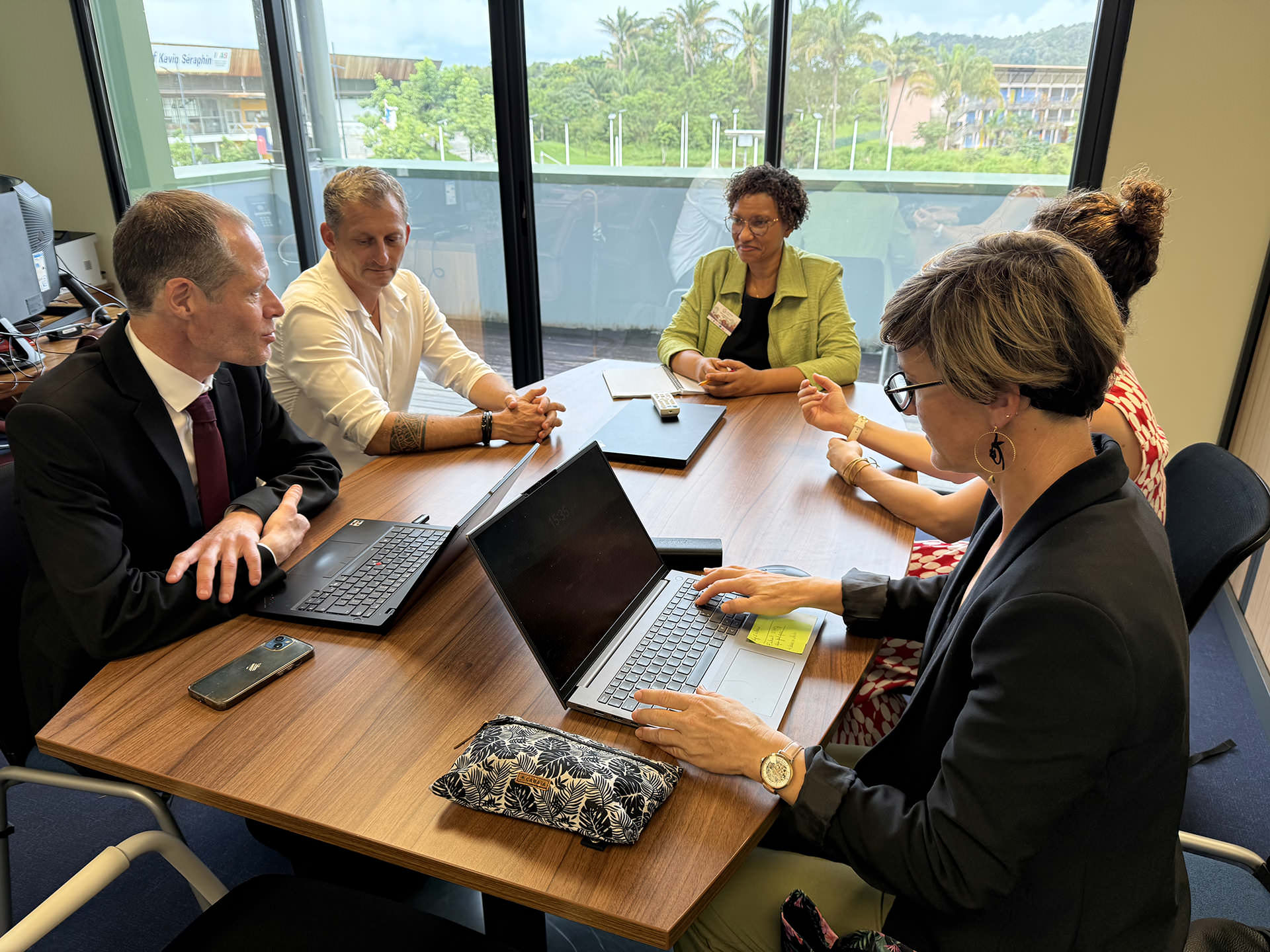
The STAPS department at the University of Guyana welcomed François Micheletti, Inspector General, on Wednesday 23 April 2026, to talk to teachers and students about attractiveness, courses, masters degrees and human and material needs.
An important meeting for the STAPS sector
On Wednesday 23 April 2026, the University of Guyana welcomed François Micheletti, Inspector General for Education, Sport and Research, who is also attached to the IGÉSR. The visit provided an opportunity to bring together teachers and students to discuss the STAPS programme.
The aim of this meeting was clear: to take stock of the current situation of the STAPS course at the University of Guyana. Discussions focused on training courses, the continuity of master's courses and the needs necessary for the proper development of this training.
The presence of the Inspector General also provided an opportunity to listen to the teaching, administrative and technical teams. In this way, everyone was able to express the realities on the ground and the expectations linked to the day-to-day running of the sector.
An attractive option for students
The STAPS course at the University of Guyana is proving to be very attractive. Nearly 300 applications were received. This figure shows that young people are very interested in training in the sciences and techniques of physical activities and sport.
This dynamic is a positive sign for the University of Guyana. It shows that training meets a strong expectation in the region. However, this attractiveness also creates new needs. The more students a course attracts, the more it needs to have solid resources to support them.
Against this backdrop, François Micheletti addressed the students. He discussed with them the current challenges facing the course and its development within the university. These discussions provided a better understanding of the students' expectations and the constraints faced by the teams.
Human needs to be strengthened
The discussions highlighted a number of human needs. One of the priorities is the creation of permanent posts. This is in addition to the work carried out by part-time teachers, who are already involved in the operation of the sector.
The need to strengthen the supervision of young people was also emphasised. This remains a key issue for STAPS training, as students need regular supervision, clear educational guidelines and support tailored to their needs.
The continuity of master's courses is also an important issue. Teachers and students were able to discuss the conditions necessary to enable students to continue their training after the bachelor's degree. This continuity is a key issue for the future of the sector.
Identified material and budgetary needs
Discussions also focused on budgetary and material issues. The smooth running of the STAPS programme depends on concrete resources. Training courses require appropriate equipment, consumables and efficient logistical organisation.
Among the needs mentioned was the purchase of equipment and consumables over a three-year period. This will enable us to anticipate the needs of the sector and ensure greater stability in the organisation of teaching.
The resources allocated to logistics were also discussed. These play an essential role in the quality of training courses. Without sufficient material support, teams find it more difficult to carry out teaching activities in good conditions.
Supporting the expectations expressed at national level
After a number of on-site discussions, a working session was led by the provisional administrator, Ms Martine SEBELOUE. This working session provided an opportunity to structure the findings and pay particular attention to the requests made by the teams.
At the end of these discussions, the STAPS inspector said he was in favour of expressing the expectations and demands from the field at national level. This position concerns the teaching, administrative and technical teams involved in the sector.
This step marks an important moment for the STAPS course at the University of Guyana. It provides an opportunity to highlight the needs that have been identified and to defend the conditions necessary for the sustainable development of the course.
The meeting on 23 April 2026 provided a clear overview of the STAPS programme at the University of Guyana. Its attractiveness, with almost 300 applications, confirms its importance for the region. However, human, material, budgetary and logistical needs remain essential. In order to sustain this momentum, it is necessary to monitor the follow-up given at national level and to remain mobilised around the development of the field.
FAQ
When did the Inspector General of the STAPS course come to the University of Guyana?
The Inspector General visited the University on Wednesday 23 April 2026. The meeting brought together teachers and students from the University of Guyana.
Who represented the Inspectorate General at this meeting?
François Micheletti, Inspector General for Education, Sport and Research, took part in the meeting. He spoke to the STAPS students and teams.
Why was this meeting about the STAPS programme so important?
It provided an opportunity to take stock of training courses, the continuity of Master's courses and the needs of the sector. The discussions also gave the floor to the teaching, administrative and technical teams.
How many applications did the STAPS course at the University of Guyana receive?
The STAPS programme received almost 300 applications. This figure confirms its appeal to young people in the region.
What needs have been identified for the STAPS course?
Discussions highlighted the need to create permanent posts to supplement the number of part-time teachers. There are also needs in terms of youth supervision, equipment, consumables and logistics.
What role did Martine Sebeloue play in this meeting?
Martine SEBELOUE, provisional administrator, led a working session after the on-site discussions. This stage helped to organise the teams' expectations and demands.




 EN
EN  FR
FR  PT
PT  NL
NL  ES
ES